Macroprudential Regulation
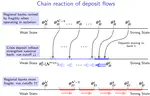
A slightly more stable national bank drains deposits from regional neighbors during crises, endogenously strengthening the national bank and weakening the regional ones. Implication: Macroprudential policies calibrated on isolated single-bank models tend to over-fortify national institutions.
Abstract
This paper identifies a novel bank-run externality: when depositors can shift funds across risky banks in a crisis, a large national bank perceived as safer may disproportionately raise the likelihood of runs among smaller regional banks. A minor shock can prompt a cascading chain reaction of deposit withdrawals among many regional banks, generating systemic vulnerabilities beyond traditional interbank-contagion channels. We extend global game models by allowing realistic deposit mobility across multiple risky banks, alongside the conventional risk-free option. Our framework captures the interaction between strategic complementarity in run/stay decisions among multiple substitutes—a dynamic that remains underexplored in the literature.
- Generalized global-games bank run models with multiple run options